
IVF Process Step by Step in Nairobi Kenya (Complete Guide)
Understanding the IVF process step by step in Nairobi Kenya helps couples feel confident during fertility treatment. Initially, many patients feel overwhelmed; however, proper guidance makes the journey manageable.
At NUR Fertility, specialists provide advanced IVF treatment with personalized care. This guide explains each stage of IVF, what to expect, and how the process works from start to finish.
According to the NHS, IVF involves fertilizing an egg with sperm in a laboratory, and then transferring the embryo into the uterus.
IVF Overview
In vitro fertilization (IVF) is one of the most effective treatments at a fertility clinic in Nairobi. It assists couples who cannot conceive naturally. For example, doctors often recommend IVF for:
- Blocked fallopian tubes
- Male infertility
- Ovulation disorders
- Unexplained infertility
Moreover, IVF allows specialists to monitor fertilization and embryo development closely, thereby improving the chances of pregnancy.
IVF Process Step by Step
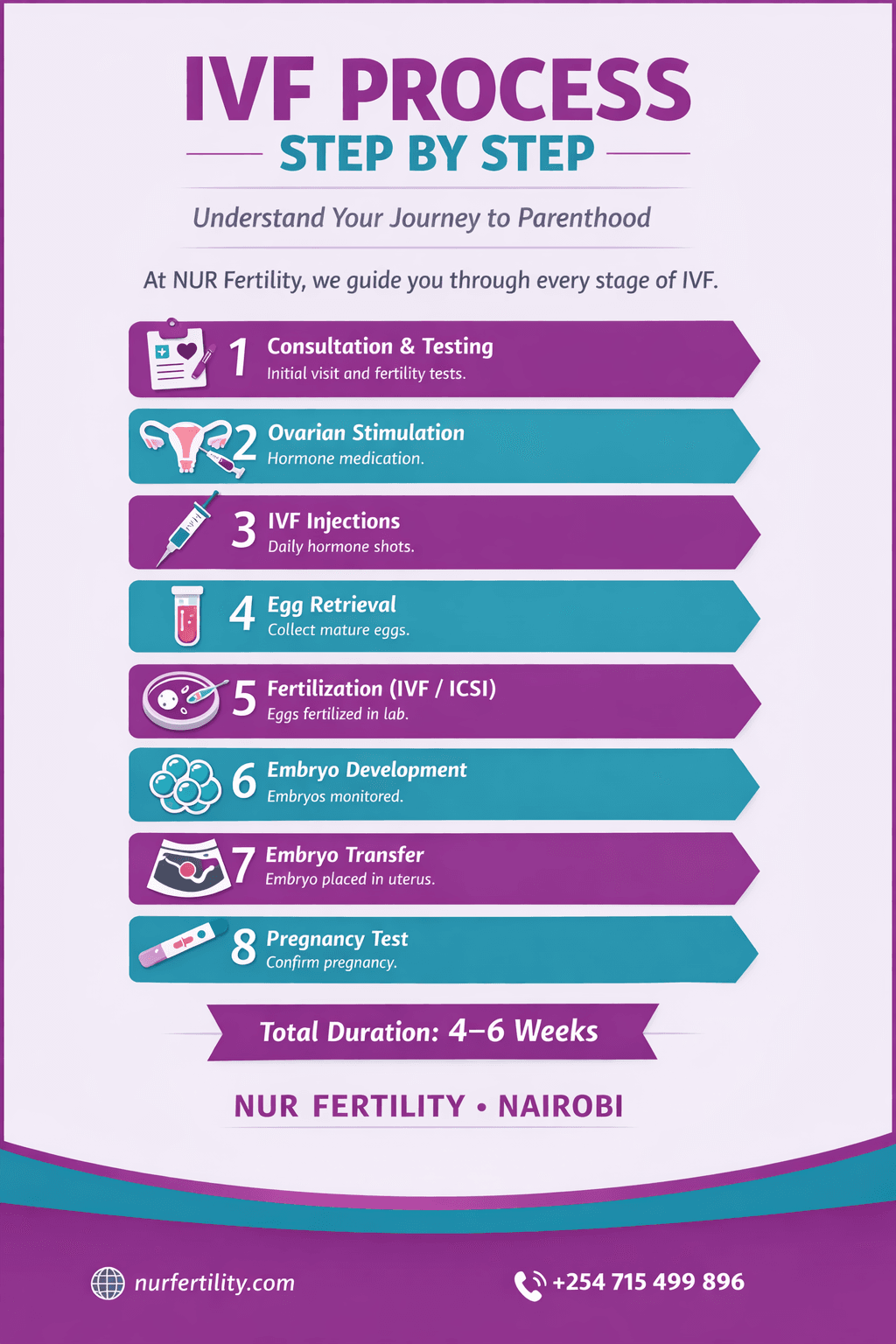
The IVF process step by step involves several controlled stages. Each stage increases the likelihood of a successful pregnancy.
1. Initial Consultation
The IVF journey begins with a fertility consultation. Doctors review your medical history and perform tests. Additionally, they provide counseling to explain the process and expectations. As a result, patients understand the treatment plan fully.
2. Ovarian Stimulation
Hormone medication stimulates the ovaries to produce multiple eggs instead of one. Meanwhile, doctors monitor progress through ultrasounds and blood tests. Therefore, they can adjust the treatment for optimal results.
3. IVF Injections
Daily injections support egg development. Most patients receive injections for 8–14 days. Consequently, the ovaries produce multiple mature eggs, which improves fertilization chances.
4. Egg Retrieval
When eggs are ready, doctors perform a minor procedure to collect them. The procedure is done under mild sedation. After retrieval, patients can rest and recover quickly.
5. Fertilization (IVF or ICSI)
Doctors fertilize the eggs with sperm in a laboratory. In some cases, ICSI is used to inject sperm directly into the egg. As a result, fertilization becomes more precise and controlled.
6. Embryo Development
Fertilized eggs develop into embryos over 3–5 days. Laboratory staff monitor growth closely. Therefore, only the healthiest embryos are selected for transfer.
7. Embryo Transfer
Doctors transfer the best-quality embryo into the uterus. The procedure is simple and usually painless. Additionally, patients receive guidance on post-transfer care to maximize implantation success.
8. Pregnancy Test
About two weeks after embryo transfer, patients take a pregnancy test. A positive result confirms the IVF cycle’s success. If unsuccessful, doctors provide counseling and plan the next steps.
IVF Timeline in Nairobi
Each IVF cycle typically lasts 4–6 weeks. The approximate timeline includes:
- Week 1–2: Ovarian stimulation and monitoring
- Week 2–3: Egg retrieval and fertilization
- Week 3–4: Embryo transfer
- Week 4–6: Pregnancy testing
Note that individual responses may vary; doctors adjust the schedule accordingly.
IVF Injections Explained
IVF injections contain hormones like FSH and LH. They stimulate the ovaries to produce eggs.
How Many Injections?
Patients usually take injections daily for 8–14 days. However, the exact number depends on individual response and monitoring results.
Benefits of IVF Injections
- Increases egg production
- Improves chances of fertilization
- Supports overall IVF success rate
IVF Success Rate in Kenya
Success depends on age, egg and sperm quality, embryo health, and medical expertise. Generally, younger patients achieve higher success rates. Additionally, proper monitoring and modern lab technology improve outcomes.
IVF Cost in Nairobi
Costs vary depending on medication, procedures, and laboratory services. Typically, they include:
- Consultation and testing
- Medication
- Egg retrieval procedure
- Laboratory fertilization
- Embryo transfer
Doctors provide a personalized cost estimate based on each patient’s treatment plan.
Who Needs IVF?
IVF suits couples experiencing:
- Infertility lasting more than one year
- Male fertility challenges
- Hormonal imbalances
- Failed previous fertility treatments
Frequently Asked Questions
Is IVF painful?
Most patients feel mild discomfort. However, doctors provide guidance on managing injections and procedures.
How long does IVF take?
One cycle usually lasts 4–6 weeks. Each step is carefully monitored for safety and effectiveness.
How many cycles are needed?
Some patients succeed in the first cycle, while others may require multiple cycles. Therefore, doctors provide support throughout.
Is IVF safe?
Yes, IVF is widely used and considered safe when performed by qualified specialists.
Book a Consultation in Nairobi
If you are ready to start the IVF process step by step in Nairobi Kenya, schedule a consultation with a fertility specialist today.
At NUR Fertility, our doctors provide advanced IVF, IUI, and ICSI treatments tailored to each patient’s needs.
Explore our services here and meet our specialists here.
Start your journey to parenthood today with NUR Fertility!